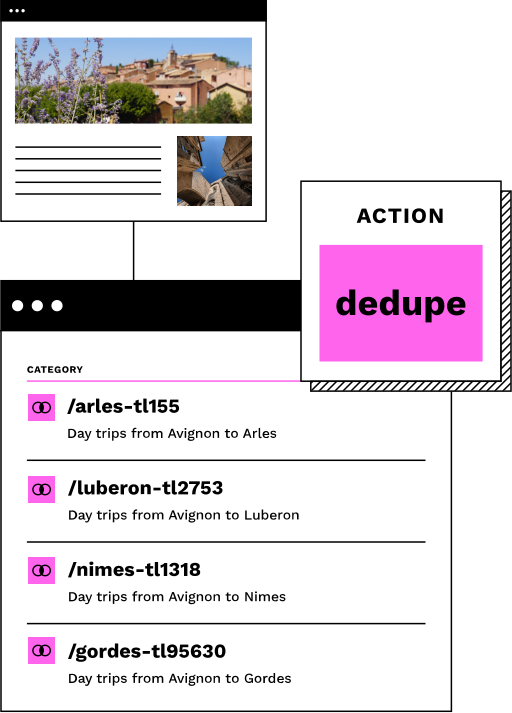
Your category pages aren't converting because they don't speak to buyers
Most e-commerce sites have thousands of category pages with thin or no content. Customers land, don't find answers to their questions, and bounce. A user centric SEO approach addresses this by building similar content around the questions real shoppers are asking across different customer segments.
Thin pages lose revenue to competitors
When customers search and find pages with no helpful content, they're more likely to go back to Google and click a competitor. Empty category pages can act as a leak in your revenue funnel.
Generic AI content doesn't convert
Many general-purpose AI writing tools produce vague, repetitive text that, without significant customization, doesn't reference your products or answer real customer questions. Without proper context engineering and structured content prompts, the output is often filler content that customers may not trust.
Manual copywriting can't cover thousands of pages
Your copywriters can produce quality content, but not for thousands of category pages. The math doesn't work. So pages stay empty while revenue opportunity sits on the table.
Context engineering: the key to content that converts
Context engineering is the discipline of assembling the right information, in the right structure, so AI produces accurate and useful output. Instead of relying on generic prompts, the Content Agent builds a rich context window for every page by combining your product catalog data, search demand signals, customer segments and category structure. This is what separates helpful, product-aware content from the vague filler that generic AI tools produce.
Similar content tailored to customer segments at every stage
Different customer segments need different content. The Content Agent generates copy that speaks to buyers whether they're just exploring, comparing options, or ready to purchase.
“What options exist?”
Category descriptions explain what products are available, key differences between options, and what to consider when choosing. This helps early-stage browsers understand the landscape.
“Which one is right for me?”
Product-aware copy answers specific questions about materials, sizing, compatibility and use cases. Attribute highlights help customers narrow their choices based on what matters to them.
“Can I trust this purchase?”
Content addresses delivery, returns, warranty and support questions. Specific product details and availability information give customers confidence to complete their purchase.
How the platform uses content prompts and context engineering
The Content Agent combines your product catalog, real search data and search demand signals into structured content prompts and recipes that auto generate content specific to each page and customer segment.
Tailor content to customer segments and intent
The Content Agent produces content tailored to different customer segments, including awareness, consideration, and decision stages. It uses product data and ranking keywords to generate copy that addresses what buyers at each stage need to know.
Context engineering from your catalog
Content isn't generated in a vacuum. The agent uses context engineering to assemble your product data (names, descriptions, attributes and prices), search demand signals and category structure into a rich context window for each page.
Execute content prompts and recipes
Configurable content prompts and recipes define the structure and tone for each page type. Recipes can combine multiple prompt steps to produce category descriptions, product-aware copy and answers to common questions in a consistent, repeatable way.
Keep content fresh as demand changes
The Content Agent runs continuously. When your product catalog changes, seasonal trends shift, or new customer questions emerge, recipes re-execute with updated context to keep content relevant and accurate.
User centric content that ranks and converts
Every piece of content is designed around your customer segments. It answers real questions, references real products, and helps give search engines additional context to rank your organic pages for user centric SEO queries.
Category descriptions that guide buyers
Each page gets a description that explains what the category contains, who it's for, and what to look for. These aren't generic summaries; they reference the specific products and attributes your customers care about.
Answers to real customer questions
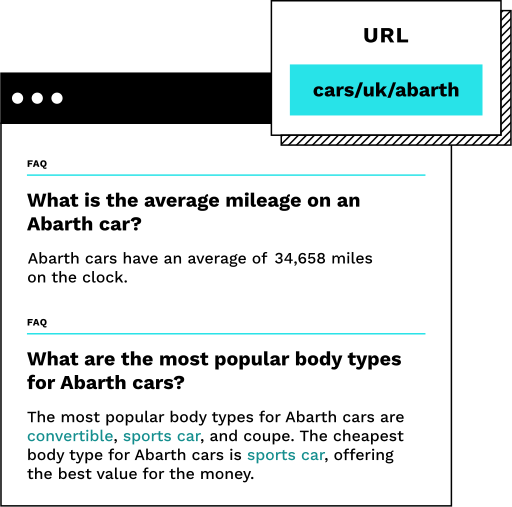
The Content Agent generates FAQ content using product data and ranking keywords, weaving clear, accurate answers into your page copy. This adds non-template content that can increase ranking keywords and improve CTR, helping customers make confident purchases.
Product-aware copy for every page
Content references your actual product attributes (materials, sizes, price ranges, brands). This makes every page feel curated and helpful rather than automatically generated, because the information is specific and verifiable.
Automatic freshness
When your catalog changes (new products arrive, old ones are discontinued, seasonal collections launch), the Content Agent refreshes page copy automatically to stay accurate. Users can review changes before publishing using the built-in review and rollback capabilities.
Manual copywriting vs the Content Agent
Writing unique, helpful content for every category page is a key factor in whether pages rank and convert or sit empty. The Content Agent makes it possible.
Without the Content Agent
- ×Copywriters spend weeks writing descriptions for a handful of pages
- ×Generic AI tools produce vague text disconnected from your products
- ×No context engineering means output ignores your catalog and customer segments
- ×Content goes stale as your catalog changes through the year
- ×New pages launch without descriptions and can struggle with rankings and conversions
With the Content Agent
- The New Pages Agent creates optimized pages, each populated with relevant products and ready to rank, while the Content Agent contributes content elements like category blurbs
- Context engineering ensures every description references your actual products
- Content prompts and recipes produce consistent, user centric copy for each segment
- Content refreshes automatically when products or demand change
- Copywriters focus on strategy and brand voice, not repetitive writing
A related platform where content works with every agent
The Content Agent doesn't work in isolation. The Topic Sieve, a sub-agent of the New Pages Agent, filters candidate topics to ensure pages are only created for genuine opportunities with real search demand and sufficient products. The Similar AI's New Pages Agent automatically creates optimized category pages with matched products that are ready to rank from day one, while the Content Agent handles ongoing content generation and optimization separately. And the platform coordinates with the Similar AI's Linking Agent to ensure content includes natural references to related pages across your site.
This means content isn't a separate workstream that needs to be managed manually. It's an integrated part of how this platform builds and maintains your organic pages.
The result: the pages Similar AI creates and manages have helpful, accurate, user centric content that can improve rankings and support stronger organic performance.
Frequently asked questions
What is context engineering in the Content Agent?
Context engineering is the discipline of assembling the right information, in the right structure, so AI produces accurate and useful output. The Content Agent builds a rich context window for every page by combining your product catalog data, search demand signals, customer segments and category structure. This approach is what separates it from generic AI writing tools that produce vague, repetitive text disconnected from your actual products.
Why don't generic AI writing tools work well for e-commerce category pages?
General-purpose AI writing tools typically produce vague, repetitive text that doesn't reference your products or answer real customer questions. Without proper context engineering and structured content prompts, the output is often filler content that doesn't speak to the specific questions buyers have at different stages of their journey. The Content Agent addresses this by grounding every piece of content in your actual catalog and real search demand signals.
How does the Content Agent handle thousands of category pages?
The Content Agent uses configurable content prompts and recipes to auto generate content specific to each page and customer segment, making it possible to cover thousands of category pages that manual copywriting teams simply can't keep up with. Content also refreshes automatically when products or demand change, so pages don't go stale as your catalog evolves throughout the year. This frees copywriters to focus on strategy and brand voice rather than repetitive writing.
What kind of results has the Content Agent produced?
A/B tested category blurbs produced a 13.3% traffic increase on a related page, demonstrating measurable impact on organic traffic. The platform has also been associated with a 29x ROI and $2.4M in attributed value for customers. These results come from content that is built around real search demand and customer segments rather than generic AI output.
Does the Content Agent work on its own or as part of a larger platform?
The Content Agent is part of a broader platform and does not work in isolation. It works alongside other agents such as the New Pages Agent, Linking Agent and the Topic Sieve capability, each contributing to a connected approach to e-commerce SEO. For example, the New Pages Agent creates optimized pages populated with relevant products, while the Content Agent contributes content elements like category blurbs.
See how user centric content generation drives revenue for your site
Book a demo to see how the Content Agent uses context engineering and content prompts to auto generate helpful, accurate content for your category pages. Or use our growth calculator to estimate the revenue impact for your site.