Short-form content is the first thing searchers see
Meta titles and descriptions appear in search results. H1s and category blurbs appear on the page itself. This content shapes how customers perceive your brand and whether they click at all.
Meta titles drive click-through rates
A meta title that uses language customers search for can double click-through rates. But writing thousands of unique, relevant titles by hand is impossible without a dedicated team.
Generic blurbs hurt conversions
Category blurbs that say nothing useful, or worse are obviously templated, make your site look like every other e-commerce site. Customers notice when content feels automated.
Manual writing doesn't keep up
Copywriters can write brilliant content, but not for thousands of pages. Short-form content often gets deprioritized, leaving category pages with no title, no description, or placeholder text.
Every piece of short-form content, handled by the Content Agent
The Content Agent generates all the content that appears in search results and at the top of your category pages. Each piece is optimized for both search engines and the customers who read it.
Meta titles (H1s)
Clear, compelling titles that include the keywords customers search for. Each title is written to maximize click-through rates while accurately describing what the page offers.
Meta descriptions
Descriptions that appear in search results, explaining what the page contains and why it's relevant. Written to encourage clicks without making promises the page can't keep.
Category blurbs
Introductory text that helps customers orient themselves. These blurbs introduce key attributes found across products in the category, giving users an approachable way to understand what's available without reading every product description. Because they're generated from your data, they stay accurate as your catalog changes.
Section headers and subheadings
Logical headings that break up content and help both users and search engines understand the page structure. Each heading reflects the specific products and attributes on that page.
How the Content Agent generates short-form content
Every piece of content is grounded in your first-party data: product descriptions, attributes, and the keywords your pages already rank for. This is a fundamentally different way of writing content. The Content Agent creates data-driven stories that pull out insights simply not possible when writing by hand or using generic AI tools.
Analyze your product data
The Content Agent reads your product catalog: names, descriptions, attributes like material, size, color and price range. This context engineering is core to how it generates content. By providing the right context, we use LLMs more like a summarization engine than a hallucination engine.
Incorporate ranking keywords
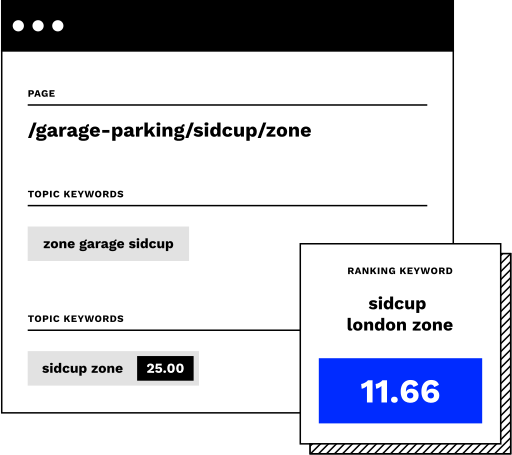
Search Console data shows which keywords each page already ranks for. The Content Agent incorporates these into meta titles and descriptions to reinforce what's already working. This is another form of context engineering, grounding the output in real performance data.
Apply your brand voice
You configure your tone of voice (formal or casual, technical or conversational). The Content Agent adapts its writing style so content sounds like it came from your team, not a generic AI tool.
Respect your blocklist
Some words and phrases don't belong in your content: competitor names, trademarked terms, or language that doesn't fit your brand. The Content Agent avoids anything on your blocklist automatically.
Guarantee the right length
Content length matters for short-form content: it needs to be short, but not too short. We guarantee that all content meets your length requirements. LLMs are notoriously bad at counting, so we've built systems to ensure every piece is exactly the right length for its purpose.
Content that's relevant, on-brand and the right length
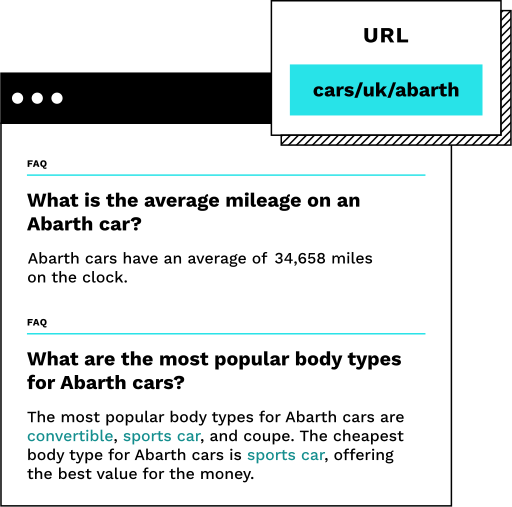
Using first-party data means every piece of content is specific to that page. Your product attributes, your ranking keywords, your tone of voice.
Guaranteed relevance
Content references your actual products and their attributes. A “Brass Pendant Lights” page will mention brass finishes, pendant styles and relevant price ranges, because it's pulled from your catalog.
Your voice, across every page
Configure your brand's tone of voice once. Every piece of content follows those guidelines, whether it's playful and casual or professional and precise. No more inconsistent messaging across pages.
Appropriate length
Meta titles stay under character limits. Descriptions hit the sweet spot for search results. Category blurbs are concise enough to be read, detailed enough to be useful. Every piece is the right length for its purpose.
LLMs without context vs context-engineered content
Nobody is writing this content by hand anymore. The question is whether your LLM-generated content has the right context to be useful.
Generic LLM approaches
- ×Content generated page by page, or via spreadsheets with complex formulas
- ×No access to your product catalog, so content lacks specificity
- ×No ranking keyword data, so no SEO value added
- ×Constant retries to get the right length, because LLMs can't count
- ×Blocklists managed manually, tedious and error-prone
With the Content Agent
- Every page gets unique, relevant short-form content
- Content incorporates ranking keywords to improve click-through rates
- Your brand voice is applied consistently across your site
- Blocklisted words and phrases are avoided
- Copywriters focus on strategy and high-impact creative work
Not just for new pages: improve your existing content too
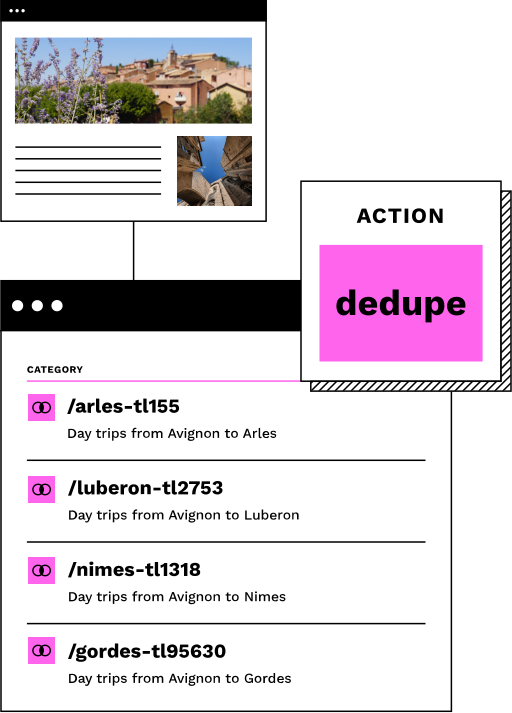
Many sites have category pages with missing or outdated short-form content: meta titles written years ago, descriptions that don't match what's on the page anymore, blurbs that were never filled in.
The Content Agent can regenerate short-form content for your entire site, updating existing pages with fresh, relevant content based on current product data and ranking keywords.
The result: improved click-through rates and a more consistent brand experience, without touching your page templates.
Part of a complete content system
The Content Agent works alongside every other part of the Similar AI platform:
- •The New Pages Agent creates new pages with complete short-form content from day one
- •A/B Testing tests which title and description approaches work best for your site
- •The Enrichment Agent provides enriched product attributes that improve the specificity of generated content
Together, they ensure every page has complete, relevant, on-brand content that helps customers and search engines understand what you offer.
Frequently asked questions
How is this different from using ChatGPT to write meta titles?
ChatGPT doesn't have access to your product catalog, your ranking keywords, or your brand voice guidelines. It can't guarantee that content is relevant to what's actually on the page. The Content Agent uses your first-party data to generate content that's specific, accurate and on-brand; not generic AI text that could apply to any e-commerce site.
Can I review content before it goes live?
Yes. You can configure the Content Agent to generate drafts for review, or to publish ready-to-publish changes via API after your team has built confidence in the output. Most customers start with review mode and move to auto-publishing after seeing the quality of the first batch.
What's a blocklist and how does it work?
A blocklist is a set of words and phrases the Content Agent will never use: competitor names, trademarked terms, words that don't fit your brand, or anything else you want to avoid. You configure the blocklist once and it applies to all generated content.
How does the Content Agent know my brand voice?
You configure tone of voice settings during onboarding (formal or casual, technical or conversational, concise or detailed). The Content Agent adapts its writing style to match these settings. You can also provide example content so it learns from your existing voice.
Can this update content for existing pages?
Yes. The Content Agent can regenerate short-form content for your entire site, not just new pages. This is useful for sites with category pages that have missing, outdated or inconsistent content.
How does it ensure the right length for meta titles and descriptions?
The Content Agent is configured with character limits and best practices for each content type. Meta titles stay under 60 characters, descriptions hit the optimal range for search results, and blurbs are calibrated to be useful without overwhelming the page.
See short-form content generation in action
Book a demo and we'll show you how the Content Agent generates meta titles, descriptions and category blurbs using your actual product data. Real examples from your site, not generic demos.