Why classification matters for new page decisions
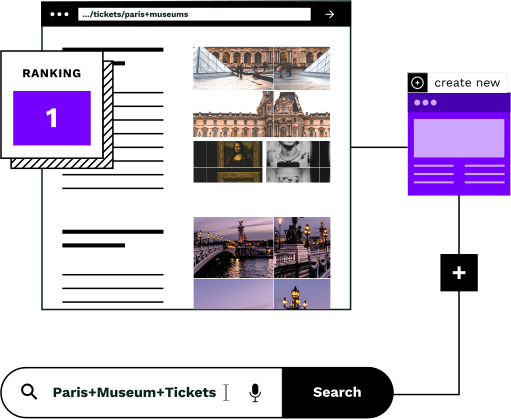
The agent needs to know what type of page already ranks for a topic before deciding whether to create a new one. If a product page ranks #5 for “modern chandeliers”, creating a dedicated category page could capture that traffic better.
Decide what to create
If a product page ranks #5 for a broad search term, a dedicated category page could rank higher. If a blog post already covers a topic well, creating a new category page might not add value. The page type informs the decision.
Prevent duplication
Before the topic sieve can check for duplicates, we need to know what pages you already have. Page type classification creates the baseline against which new candidates are checked.
Avoid cannibalization
If you already have a category page ranking for a topic, creating another one would compete with yourself. The Topic Sieve uses page type data to reject topics where you already have the right page type in place.
Page types the agent identifies
The New Pages Agent recognizes page types common to e-commerce and content sites. Each type has distinct characteristics that inform how the agent handles it when creating new pages.
Product pages
Individual product listings with SKU-level detail. These are the bottom of your funnel: specific products people can buy.
Category pages
Collection pages that group products by shared attributes. These capture mid-funnel searchers who know what type of product they want.
Brand pages
Pages dedicated to specific manufacturers or designers. These capture brand-loyal searchers and branded search queries.
Blog posts
Editorial content that addresses questions, trends, or topics related to your products. These build authority and capture informational queries.
Landing pages
Campaign or promotional pages designed for specific traffic sources. Often temporary or seasonal.
Location pages
Pages targeting geographic searches: stores, service areas, or location-modified queries like 'furniture stores in Dallas'.
How classification works
Classification is based on URL patterns. The agent reads your site's URL structure to determine what type of page lives at each address, then uses this to make smarter decisions about new page creation.
Read your URL structure
The agent maps your site's URL patterns: /products/ paths are product pages, /collections/ or /categories/ are category pages, /blog/ paths are editorial content. Most e-commerce sites follow recognizable conventions.
Classify every page
Each URL gets assigned a page type based on its pattern: product page, category page, brand page, blog post, location page, or other. You can review and correct any classification.
Feed into the Topic Sieve
When the Topic Sieve evaluates whether to create a new page for a topic, it checks what page type already ranks. A product page ranking #5 for a broad term is a signal that a category page could do better.
Inform page creation decisions
The New Pages Agent uses page types to decide what to create. If you have product pages but no category pages for a topic with demand, that's an opportunity. If you already have the right page type, the agent skips it.
What you get
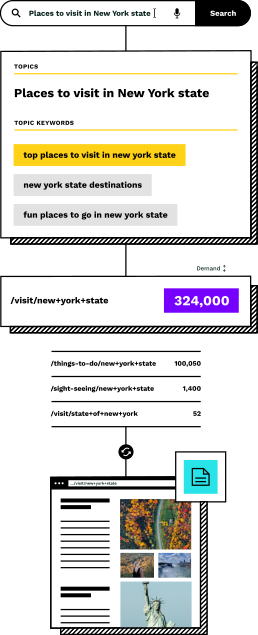
The New Pages Agent gives you visibility into how it sees your site, so you can verify its understanding.
Page type map
Every URL on your site classified by type: product, category, brand, blog, location, or other.
Type breakdown
See how many of each page type you have, so you can spot where category coverage is thin.
Creation opportunities
Topics where product pages rank but category pages don't exist yet: prime candidates for new pages.
Override controls
Review and correct any classification. Your overrides are preserved and improve future accuracy.
The foundation for everything else
Page type classification feeds directly into the Topic Sieve, which decides whether a new page is worth creating. If a product page already ranks for a topic, the sieve knows a new category page might outperform it. If a category page already exists, there's no point creating a duplicate.
From there, the New Pages Agent creates the pages that pass the sieve's checks. Classification ensures every new page fills a genuine gap rather than competing with something you already have.
URL-based classification is simple by design. It gives the agent the context it needs without overcomplicating the process.
Frequently asked questions
What if a page doesn't fit standard types?
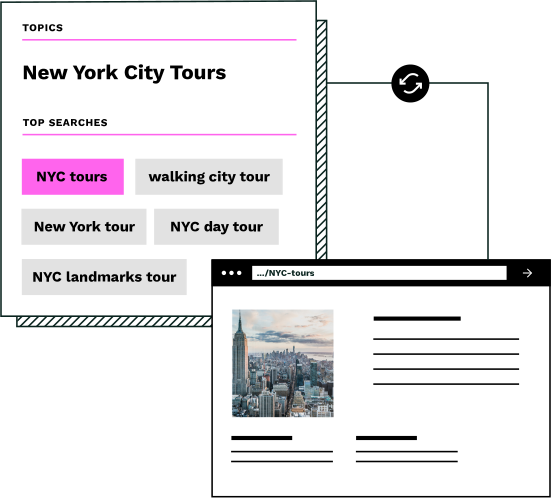
The agent has an 'other' category for pages that don't match standard types, plus the ability to define custom page types specific to your site. If you have a unique page structure (configurators, comparison pages, lookbooks) we can create custom classifications.
How does URL-based classification work?
The agent reads your URL patterns to determine page types. /products/ paths are product pages, /collections/ or /categories/ are category pages, /blog/ paths are blog posts. Most e-commerce sites follow recognizable conventions. You can correct any misclassification.
Can I correct misclassifications?
Yes. You can manually override any classification. These overrides are preserved and improve the agent's understanding of your site's URL structure.
How does this help with new page creation?
When the Topic Sieve evaluates a topic, it checks what page type already ranks. If a product page ranks #5 for 'modern chandeliers', a dedicated category page could capture that traffic better. If a category page already exists, there's no need to create another one.
Does this work for non-e-commerce sites?
Yes. The agent recognizes common URL patterns for content sites (articles, guides), service sites (service pages, location pages), and hybrid sites. The same principle applies: understand what you have before deciding what to create.
Map your site structure
Book a demo and the New Pages Agent will classify your site's pages, show you the type distribution, and identify where you have coverage gaps worth filling.