Your catalog knows your products. But customers can't find them.
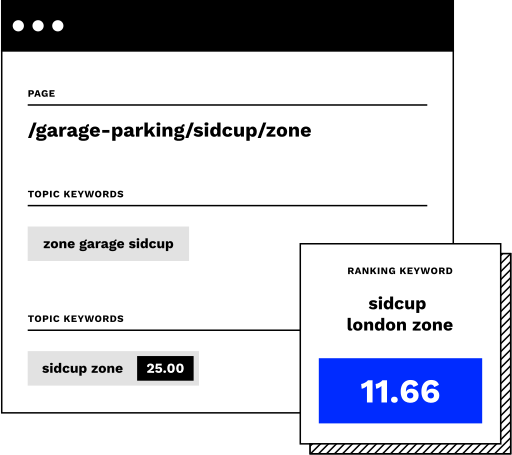
A customer searching for “brass chandeliers” lands on a competitor's site because your chandelier page doesn't mention materials. Your products are invisible when customers search by brand, style, material or use-case.
Product names don't match how customers search
Suppliers name products for inventory management, not for how customers look for them. The details buyers care about (color, material, use-case, compatibility) are buried in descriptions or missing entirely.
Your categories don't reflect how customers think
Your site organizes by product type. But a customer looking for “wireless noise-cancelling headphones under $200” won't find you if your category tree just says “Headphones”. You need pages that match how customers actually shop.
Manual tagging can't keep up
Even a catalog with just a few hundred products creates countless combinations customers might search for. No team can map this by hand. The result: hidden inventory that never gets discovered.
From product catalog to discoverable products
The Enrichment Agent reads your product data and extracts the attributes customers search for, such as brands, materials, and styles depending on your site. It then enriches your products with structured data so they surface for searches your catalog doesn't cover.
Extract what customers search for
The agent analyzes your product titles, descriptions and attributes to extract what customers actually look for, such as brands, colors, materials, and sizes depending on your catalog. These become the building blocks for new pages.
Organize attributes into customer language
Extracted details are grouped to match how customers think: brand, color, material, room, style. The system handles ambiguity automatically ("Red Valentino" is recognized as a brand, not a color plus brand).
Create pages customers search for
Attributes are combined into the pages customers need: "Samsung TV", "brass living room lamps", "wireless headphones under $200". Each page is built with the right products, content and connections to related pages.
Prioritize by revenue impact
Each potential page is scored by customer demand and competitive opportunity. You see a prioritized list of pages most likely to generate revenue (not just traffic) so your effort goes where it matters.
See how it works in practice
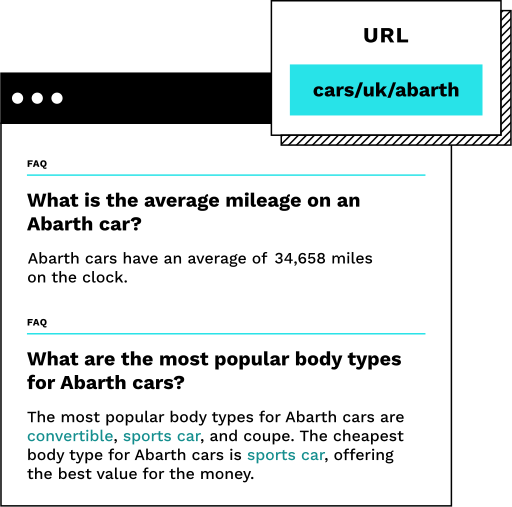
A single product can generate dozens of searchable attributes. Combined with other products in your catalog, those attributes create hundreds of pages customers are already looking for.
Your product data
Title: “Visual Comfort TOB 5003HAB-NP Thomas O'Brien Bryant Large Table Lamp”
Category: Table Lamps
Price: $629.00
What customers search for
Pages created from these searches
Each page is built with matched products, helpful content and connections to related pages.
Manual tagging vs automated discovery
Most sites rely on whatever their product system provides. The Enrichment Agent creates pages based on what customers actually search for.
Without Similar AI
- ×Product data uses supplier language, not how customers actually search
- ×Categories limited to your existing site structure, missing countless specific searches
- ×Manual tagging is incomplete and impossible to maintain as the catalog grows
- ×No way to know which attribute combinations customers are looking for
- ×New products sit in generic categories, invisible to specific customer searches
With the Enrichment Agent
- Every product is connected to how customers search for it, with attributes like brands, materials, and styles
- Pages created for every way customers might look for your products
- Automated discovery adapts to your specific catalog and updates as it grows
- Pages are validated against real customer behavior before being created
- New products automatically get the pages they need to be found
The foundation for every page we create
The Enrichment Agent works as part of the New Pages Agent, enriching your products with structured data that feeds into page creation. Each page is built with matched products, helpful content and connections to related pages.
The gap analysis validates which pages have real customer demand, so you only create pages that will bring buyers. The agent can also run standalone (in beta) to enrich your product feed without creating new pages.
The result: every category page on your site matches how customers actually search, built from your own product data and real customer behavior.
Understands what customers mean, not just what they type
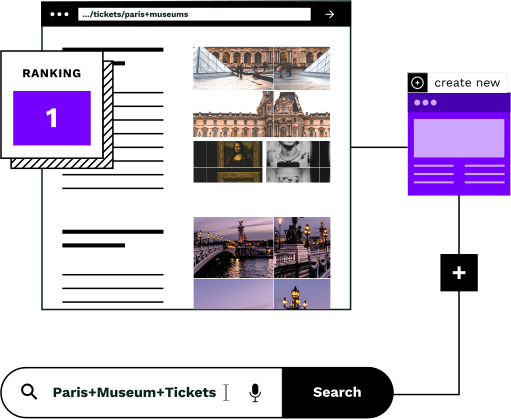
Customers don't always spell out what they want. The agent recognizes the products they're really looking for, even when they use shorthand or incomplete terms.
brand: Visual Comfort, designer: Thomas O'Brien, collection: Bryant
The customer doesn't type the brand or designer, but the agent recognizes "Bryant" as a specific collection and connects it to the right products.
style: Mid-Century Modern, material: Brass, category: Chandelier
Customers combine style, material, and product type in ways your catalog doesn't. The agent extracts these attributes and creates the page they're looking for.
style: Farmhouse, category: Dining Table, price: under $2,000
Style, category, and price range combined. Your catalog lists these separately, but customers search for the combination. The agent bridges that gap.
Case Study
How Visual Comfort unlocked hidden product demand
Visual Comfort is a luxury lighting retailer with rich product data (designer names, finishes, materials, styles), but their site only had a few hundred category pages that didn't match how customers actually search.
The Enrichment Agent extracted what customers were searching for from their product data and enriched it with the terms and attributes customers actually use. Each new page was built with the right products, helpful content and connections to related pages. The result: $2.4M in new annual revenue and a 29x ROI.
Read the full case study$2.4M
New annual revenue
29x
ROI achieved
Thousands
Pages created
12 months
Measurement period
Frequently asked questions
What ROI can we expect from this?
Visual Comfort generated $2.4M in new annual revenue with a 29x ROI from pages created from their product catalog. Results vary by industry and catalog size, but retailers with 3,000+ products typically see meaningful revenue impact within the first few months.
What product data do you need to get started?
A product feed with titles and descriptions is the minimum. Richer data (with attributes like brand, color, material, size) produces better results. We integrate directly with Shopify, BigCommerce, WooCommerce and most e-commerce platforms.
Does this require engineering resources?
Minimal. We integrate with your existing e-commerce platform and handle page creation automatically. Your team reviews and approves pages before they go live, but doesn't need to build them manually. Most retailers are up and running in a week.
How does this scale with our catalog?
Even catalogs with just a few hundred products benefit from enrichment. Product diversity matters more than size. We prioritize opportunities by customer demand so you focus on the enrichments with the most revenue potential.
How does this work with our existing category structure?
Similar AI creates new pages that complement your existing site structure. The new pages capture specific searches your current categories don't cover (like "brass chandeliers" when you only have a general "Chandeliers" page). Existing pages stay in place.
How quickly do we see results?
Most retailers see their first pages live within the first week. Revenue impact typically follows within 4-8 weeks as new pages gain visibility. The system continues finding new page opportunities as your catalog and customer behavior evolves.
See what pages your products can create
Book a demo and we'll analyze a sample of your products to show you the pages your customers are already searching for. Real data from your catalog, no commitment.