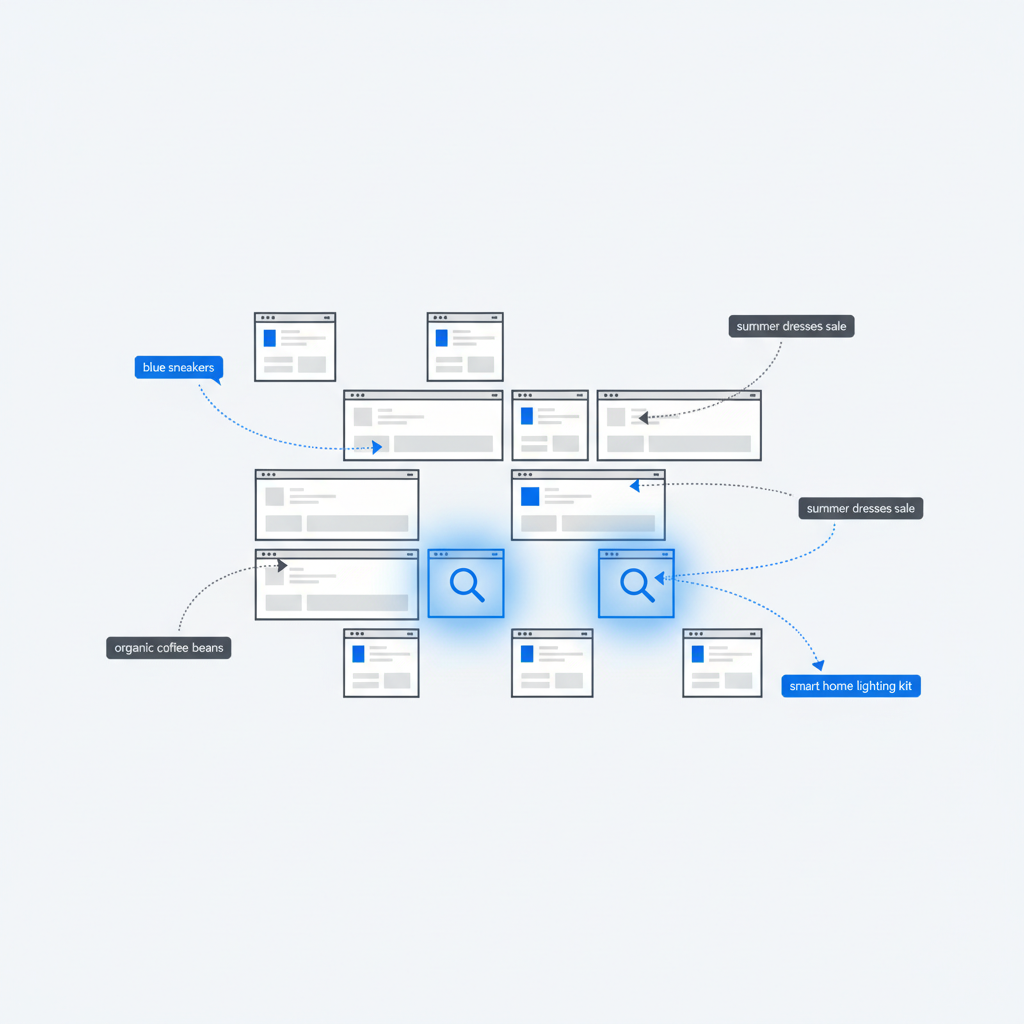
Customers are searching for products you don't carry
Every day, shoppers arrive at your site looking for products you simply don't stock. These aren't SEO gaps or missing landing pages; they're blind spots in your inventory. Categories of genuine customer demand where you have nothing to sell.
Demand you can't see
Customers search for products in categories you don't carry, then leave. Without visibility into these searches, your buying team has no way of knowing what inventory gaps are costing you.
Gut instinct has limits
Merchandising teams rely on supplier catalogs, competitor watching, and intuition to spot new product opportunities. Meanwhile, actual customer demand data sits untapped in your search logs.
Competitors stock what you don't
When customers can't find a product category on your site, they buy from someone who carries it. Every inventory gap is revenue flowing directly to competitors who anticipated the demand.
How the New Pages Agent finds inventory gaps
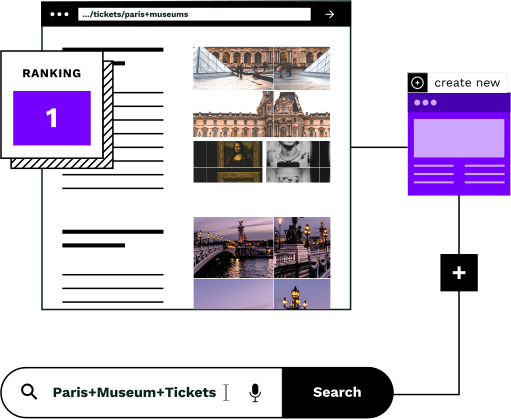
The agent generates named entities and structured data from your product catalog, then cross-references them against search demand to reveal categories where customers are searching but you have nothing to sell.
Map your current inventory
The agent scans your product catalog to understand exactly what categories, brands, and attributes you currently stock.
Analyze customer demand
It examines real search behavior to see what shoppers are actively looking for on your site and across the market.
Identify inventory gaps
The agent compares customer demand against your catalog to find categories where searches happen but no matching products exist in your inventory.
Prioritize by opportunity size
Gaps are ranked by search volume, purchase intent, and market potential so your buying team knows where to invest first.
What inventory gaps look like
These are the types of patterns the agent identifies on e-commerce sites. Customers searching for products the retailer doesn't carry: demand walking out the door.
Emerging technology gaps
A lighting retailer's customers search for “solar-powered garden lights” but the store carries no solar products at all. The demand is real; the inventory to meet it doesn't exist.
Signal: High search volume, zero matching SKUs
Opportunity: New product line
Lifestyle category gaps
A furniture retailer's customers search for “standing desks” but the store only carries traditional seated desks. Customers want ergonomic options that aren't in the catalog.
Signal: Consistent searches, no products in category
Opportunity: Category expansion
Trending category gaps
A sports retailer's customers search for “pickleball equipment” but the store has never stocked the sport. A fast-growing category is generating searches but zero sales.
Signal: Growing search trend, zero inventory
Opportunity: New sport category
Brand demand gaps
An electronics retailer's customers search for “Bose earbuds” but the store only carries Sony and JBL. Brand-loyal customers are searching and leaving empty-handed.
Signal: Brand-specific searches, no matching products
Opportunity: Brand partnership
Guesswork vs demand-driven buying
Most buying teams rely on intuition and vendor pitches to decide what to stock. The New Pages Agent shows you exactly what customers are searching for but can't find in your catalog.
Without the agent
- ×Buying decisions based on vendor relationships and competitor copying, not actual customer demand
- ×No visibility into what customers search for but leave empty-handed, so inventory gaps stay hidden
- ×Merchandising teams build collections around what you have, not what customers want to buy
- ×Search data sits in analytics tools, disconnected from buying and inventory planning
- ×New product opportunities only surface when competitors stock them first
With the New Pages Agent
- Inventory gaps identified from real customer searches: see exactly which products and categories customers want but you don't stock
- Demand data quantified and prioritized, so buying teams know which gaps represent the biggest revenue opportunities
- Merchandising insights grounded in search behavior, not guesswork: build collections around proven customer intent
- Customer demand signals flow directly to buying and planning teams, closing the loop between search and inventory
- New opportunities surface continuously as customer behavior shifts, keeping your catalog aligned with market demand
Connect your teams to real customer demand
Inventory gaps reveal missing opportunities. When customers search for products you don't carry, brands you don't stock, or categories you haven't entered, that's demand intelligence your buying and procurement teams can't afford to miss.
The New Pages Agent captures every search for products outside your current catalog and surfaces these inventory gaps in a way that's actionable across your organization. Buying teams see exactly which products and brands customers want but can't find. Procurement teams get data-backed justification for new vendor relationships. Merchandising teams see which new collections would meet proven demand. Everyone works from real customer search data rather than guesswork about what to stock next.
The result: demand-driven catalog expansion. You're not guessing which products to add; you're responding to what customers are already telling you they want to buy.
Part of the New Pages Agent pipeline
Gap analysis is powered by the same data infrastructure that drives the New Pages Agent. It works alongside sub-agents that handle each step of the pipeline:
- •Enrichment Agent: extracts the attributes from your catalog that become the building blocks of new pages
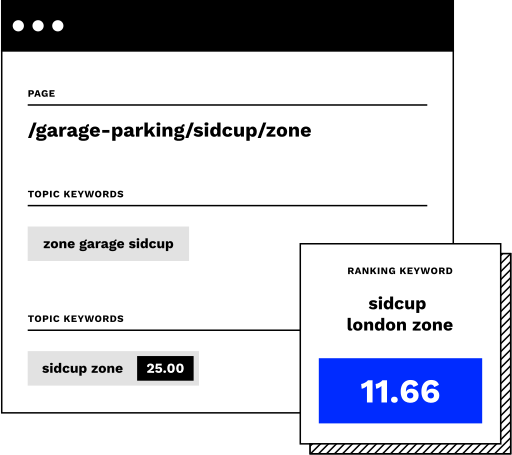
- •Topic Sieve: filters candidate pages down to the ones with real demand and relevance to your product range
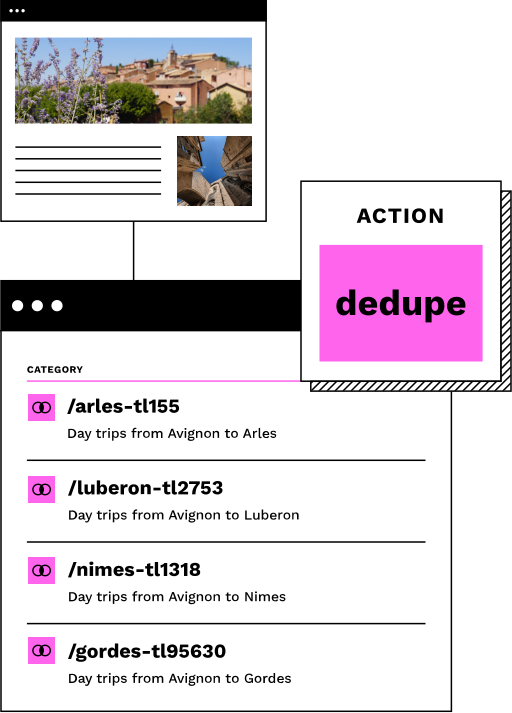
- •Page Creation: takes the highest-priority gaps and creates complete category pages with content, products and connections to related pages
- •Topic Sieve: continuously collects the performance data that powers demand analysis
Together, they form a closed loop: find the gap, validate it, build the page, measure the result.
“The most important benefit is that we were able to deliver seven-figure annual revenue growth with amazing ROI. Using Similar AI pages also saves significant time and allows us to quickly respond to market trends and consumer behavior.”
Jennifer Skeen
VP of e-commerce, Visual Comfort & Co.
Frequently asked questions
What ROI can we expect from identifying inventory gaps?
Retailers typically see significant revenue growth by stocking products their customers are already searching for. When you add inventory in categories with proven demand, you're not guessing; you're responding to real customer intent. Most clients see positive ROI within the first buying cycle as they capture sales that were previously lost to competitors.
How does the New Pages Agent know which products are missing from my catalog?
The agent generates named entities and structured data from your product catalog, then cross-references them against search demand data. When customers search for products you don't carry, that's a signal. The agent aggregates these signals to show you exactly which product categories have unmet demand and how much potential revenue is at stake.
Does this require resources from my engineering team?
Implementation is lightweight. The agent uses the same integration as the rest of the New Pages product (standard APIs or a simple tag). Your engineering team typically spends just a few hours on initial setup. After that, the agent works independently with no ongoing technical work required.
What happens after an inventory gap is identified?
You'll see the product categories with the highest unmet demand, estimated revenue opportunity, and search volume trends in your dashboard. Your buying and merchandising teams can use these to prioritize vendor conversations, inform purchasing decisions, and build a data-driven case for expanding into new categories.
How quickly will I see actionable results?
Most clients see their first inventory gap data within 2-4 weeks of implementation. You'll immediately see which product categories have demand but zero inventory, ranked by revenue potential. From there, how quickly you act depends on your buying cycles, but you'll have the data to make informed decisions right away.
Can this analysis inform decisions beyond just adding new products?
Yes. The demand signals the agent uncovers help your merchandising team in multiple ways: negotiating with vendors using real customer data, identifying seasonal trends before they peak, understanding regional demand differences, and even deciding which underperforming categories to phase out. It's a complete view of what your customers want versus what you currently offer.
See what products your customers want that you don't carry
Book a demo and we'll show you the inventory gaps hiding in your search data: the products customers are actively looking for that aren't in your catalog. Give your buying team a roadmap for what to stock next. Real data from your site, no commitment.