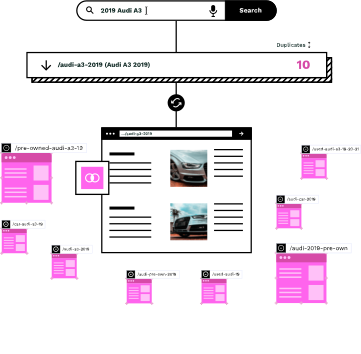
Why SEO cleanup should be your first priority
Irrelevant or duplicate pages can dilute crawl budget, confuse search engines, and split the authority your best pages need to rank. Without site consolidation, the problem tends to compound as your catalog grows. An automated cleanup process is the fastest way to reclaim lost SEO value.
Similar content and dedups cannibalize each other
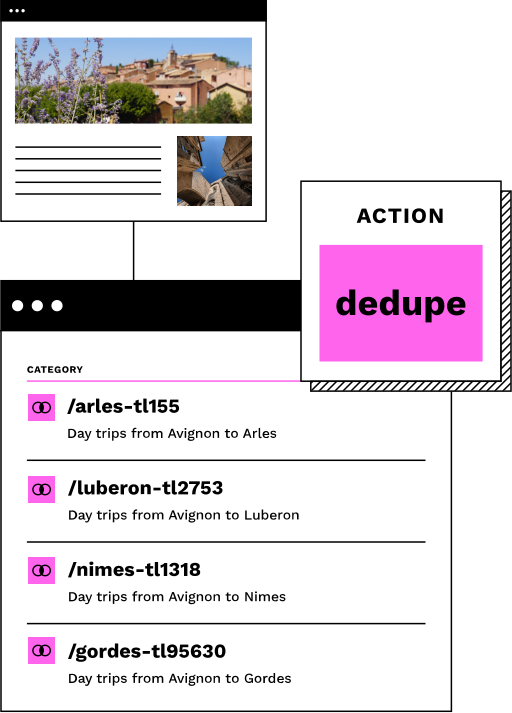
When multiple pages target the same topic, search engines have to choose which one to rank. They may end up ranking the weaker page or splitting authority so neither page ranks well. Dedup (deduplication) solves this by merging overlapping pages into one authoritative version.
Wrong-market listings confuse users
Category pages showing products from another country or region frustrate users who can't actually buy what they see. Search engines may deprioritize these pages over time as they detect that they don't satisfy intent.
Irrelevant pages waste crawl budget
Pages where the product listings don't match the topic aren't just unhelpful; they can consume crawl budget that should go to pages customers actually need. This potentially means your best pages get crawled less often.
What is dedup, and why does it matter for SEO?
Dedup (short for deduplication) is the process of finding and removing duplicate or near-duplicate content across your website. In the context of SEO clean-up, dedup meaning goes beyond identical URLs: it includes pages with similar content that target the same search intent, even when the wording differs.
Without systematic dedup, e-commerce sites accumulate hundreds or thousands of overlapping pages. Each duplicate fragment splits link equity, confuses crawlers, and creates keyword cannibalization. Content consolidation tools like Cleanup Agents solve this by clustering similar pages, scoring them by organic impact, and recommending which page to keep and which to redirect. The result is a leaner, stronger site that search engines can crawl and rank efficiently.
How Cleanup Agents run a continuous SEO content audit
The system analyzes your site structure, product catalog, and search performance to identify and act on duplicate, overlapping, and underperforming pagescleaning them up, removing them, or consolidating them. Think of it as an automated content audit and ingredient dedupe that never goes stale.
Identifies topic overlap and similar content
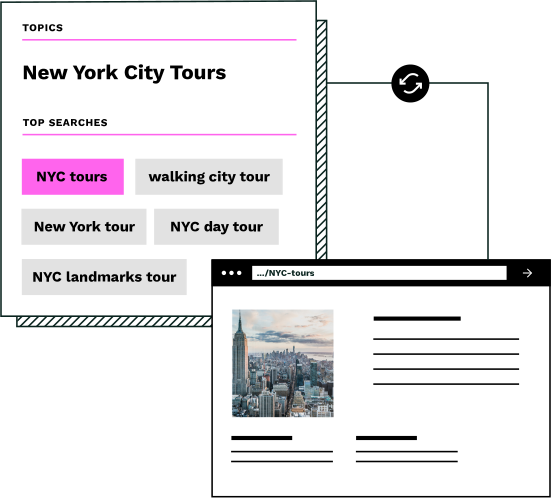
The agent maps every page on your site to the topics it targets, then finds where multiple pages compete for the same search intent. This goes beyond keyword-level matching: duplicate and overlap detection identifies pages on your site that target the same search intent, even when the pages use different wording.
Validates topics before page creation and matches products to topics
Before new category pages are created, the Topic Sieve validates candidate topics by checking product sufficiency, search demand, and other criteria to ensure only worthwhile pages are built. During page creation, products are auto-matched to the page’s topic so listings are relevant from the start.
Detects cross-market listing errors
The agent identifies category pages showing products from other markets or regions. These pages mislead users with products they can’t purchase, and search engines may lower the visibility of pages that deliver a poor experience.
Delivers cleanup changes via API
Each problem page is assessed by its impact on your site’s organic performance. The cleanup agent generates ready-to-publish changes, including 301 redirects, to consolidate, redirect, or remove pages as needed. You can review changes before they go live, or let the agent publish directly.
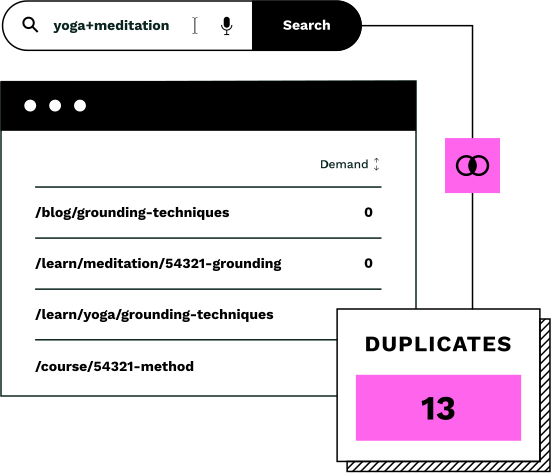
Three kinds of pages that need cleanup
These are the most common problems Cleanup Agents find on e-commerce sites. Most teams know they exist but lack the content consolidation tools to find and fix them systematically.
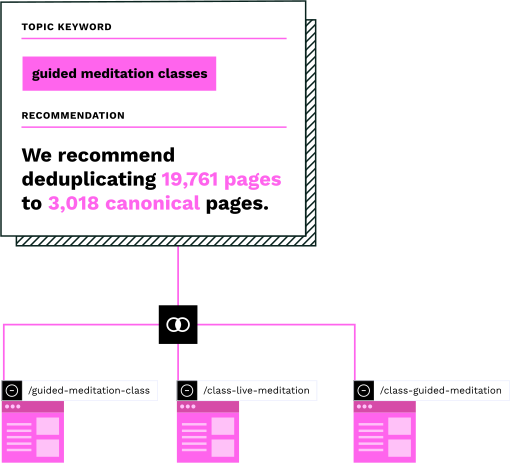
Duplicate and overlapping pages
Multiple category pages targeting the same search intent, often created over years of ad hoc taxonomy changes. The agent identifies which page to keep and which to redirect, preserving the strongest signals through smart dedup.
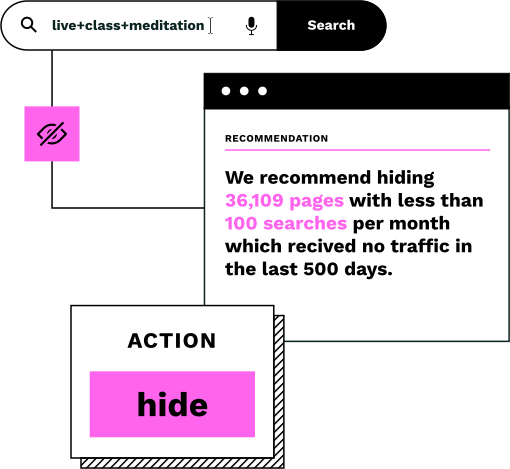
Irrelevant product listings
Category pages where the products don't match the topic. A “kitchen pendant lights” page showing bathroom sconces doesn't help anyone. The agent compares each page's products against its topic and flags mismatches for listing cleanup.
Cross-market listing errors
Category pages showing products from other countries or regions. When a UK customer sees US-only products on a page, they leave. The agent detects market mismatches across your entire catalog.
Manual SEO clean-up vs Cleanup Agents
Many teams tackle SEO cleanup once a year, if at all. The Cleanup Agent runs periodicallytypically weekly or monthlyso problems are caught early before they compound.
Without Cleanup Agents
- ×Manual crawls and spreadsheets to find duplicate pages are often tedious, can be incomplete, and can become outdated within weeks
- ×No systematic way to check whether product listings actually match the topic of each category page
- ×Cross-market listing errors go undetected until customers complain or bounce rates spike
- ×Cleanup decisions are subjective: which page to keep, which to redirect, which to remove entirely
- ×Engineering teams receive ad hoc redirect requests with no priority order or impact data
With Cleanup Agents
- Continuous content audit finds duplicate and similar content as your catalog evolves (not once a year)
- Irrelevant Category Detection analyzes page URLs, titles, H1s, meta descriptions, and product attributes to identify category pages where listed products don’t match the page’s search intent
- Cross-market listing errors are detected automatically across all markets by cross-referencing inventory data
- Every cleanup recommendation is prioritized by organic impact (such as total impressions or traffic), so your team acts on what matters most
- The agent delivers ready-to-publish changes via API: redirect, consolidate, or remove (typically no manual spreadsheet work, though you can review changes before publishing)
Website consolidation starts with how customers think
Most sites build their taxonomy around how the business sees its products. But customers don't search by internal category codes or merchandising hierarchies. They search by what they need.
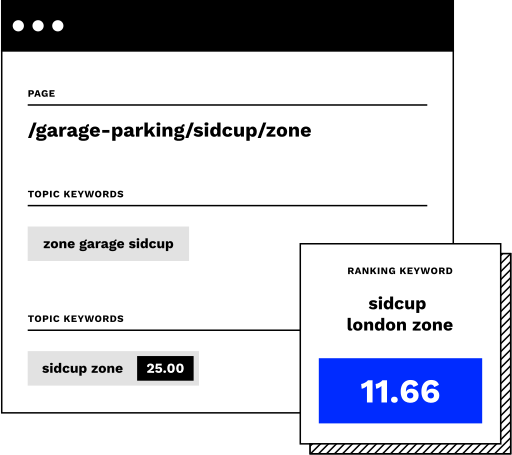
Similar AI's Topic Sieve and New Pages Agent combine all the keywords that users consider interchangeable into topics, then check whether your site structure matches. Where it doesn't, the platform can help improve rankings through SEO content consolidation: merging overlapping pages so one strong page can serve each topic instead of three weak ones.
The typical result: fewer pages, each one more relevant, better linked, and more likely to rank.
Cleanup is the first step in AI platform consolidation
Page cleanup isn't a one-off project. The Cleanup Agent removes underperforming pages to keep your catalog focused on pages that convert, and it complements other parts of the platform that help your site stay healthy as your catalog evolves:
- •Topic Sieve filters candidate topics to ensure new pages are created only for genuine opportunities, helping prevent the creation of low-value pages in the first place
- •Demand Without Supply identifies topics with search demand but no matching page, while link equity preservation during cleanup and the Linking Agent help direct link equity to the right destinations
- •Internal Linking where Similar AI's Linking Agent updates links after consolidation to point to the surviving canonical pages
- •A/B Testing measures the impact of linking strategies and other SEO changes on traffic and rankings
Together, they form a closed loop: clean up existing problems, prevent new ones, and measure the results.
“Google wasn't sending traffic to most of our pages because they weren't relevant enough for users. Many didn't answer needs search engine users had, and sometimes there were thousands of pages for the exact same need. Similar AI helped us clean up duplicate pages while typically avoiding the need to spend a significant amount of time playing catchup and piling SEO tasks onto the engineering team.”
Jan-Willem Bobbink
SEO Specialist
Frequently asked questions about content consolidation
What is content consolidation?
Content consolidation is the process of identifying duplicate, thin, or overlapping pages and merging them into fewer, stronger pages that perform better in search. It concentrates SEO equity on the pages that matter most, reducing cannibalization and improving rankings across your site.
How do you consolidate information about ideal customers in content marketing?
Start by auditing your existing pages to find cross-market listing issues, duplicate pages, and underperforming content. Similar AI’s Cleanup Agents automates this by identifying and cleaning up duplicate pages that don’t serve user search needs, and the Cleanup Agents removes underperforming pages so each surviving page speaks clearly to a specific customer intent rather than diluting messaging across competing pages.
How do you consolidate GTM across multiple websites?
Multisite consolidation requires mapping every page across all properties to shared topics, then deciding which site should own each topic. Cleanup Agents detect overlapping content across domains and recommend redirects or merges so your go-to-market strategy is unified and search engines see one authoritative source per topic.
Can I consolidate content across multiple pages into one?
Yes. The recommended approach is to identify pages targeting the same search intent, pick the strongest page to keep, merge any unique value from the others into it, and set up 301 redirects. Cleanup Agents handle this workflow automatically, prioritizing each page by organic impact to determine which one survives.
See which pages are holding your site back
Book a demo and we'll show you the duplicate, irrelevant, and mismatched pages on your site, with data on how much they're costing you. Real data from your site, no commitment. Our website cleanup and consolidation partners will walk you through every recommendation.